
Before We Start
Luge is the simplest sport at the Winter Olympics to describe and the hardest to do well.
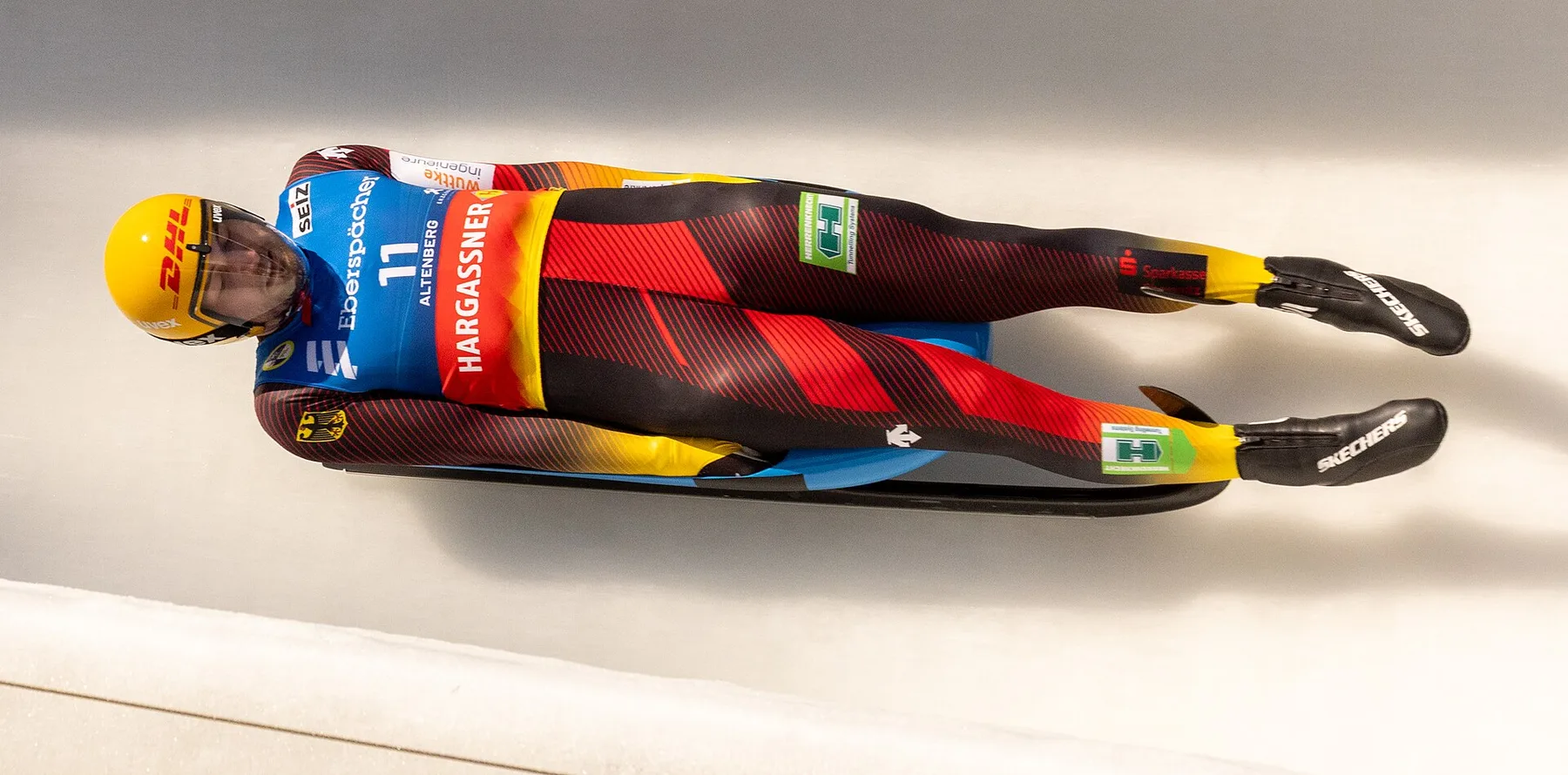
You lie on your back on a small sled. Feet first. No brakes. No steering wheel. Gravity does the rest, at up to 150 kilometres an hour, through curves that press you into the ice with five times your own body weight. You steer by flexing your calves and shifting your shoulders. You can see the sky, your own toes, and not much else.
Races are decided by thousandths of a second. Nobody else in the Olympics is timed that finely. Luge had to be, because one day two sleds crossed the line at exactly the same hundredth and the sport handed out two gold medals.
This is the story of how a Swiss village postman, a dying English poet, a Bavarian metalworker, an East German engineer and a great many brothers turned a children’s toy into that.
It is an easy read on purpose. Chapters are short. If a fact is disputed, the notes at the back say so.
Chapter 1: Sleds Before Sport

People slid down hills long before anyone thought to time it.
The oldest surviving sleds come from Norway and are about twelve hundred years old. Popular histories like to say the Vikings raced them on the Oslofjord. There is no evidence for the racing. There is plenty of evidence for the sleds.
The first written mention of sled racing comes from Norwegian chronicles of the 1480s. Seventy years later there are records of races in the Erz Mountains, on what is now the German-Czech border. In the Alps, Archduke Ferdinand II of Tyrol was staging sled races in Innsbruck in the 1560s, which makes Innsbruck’s role in the sport four hundred years older than its Olympic debut.
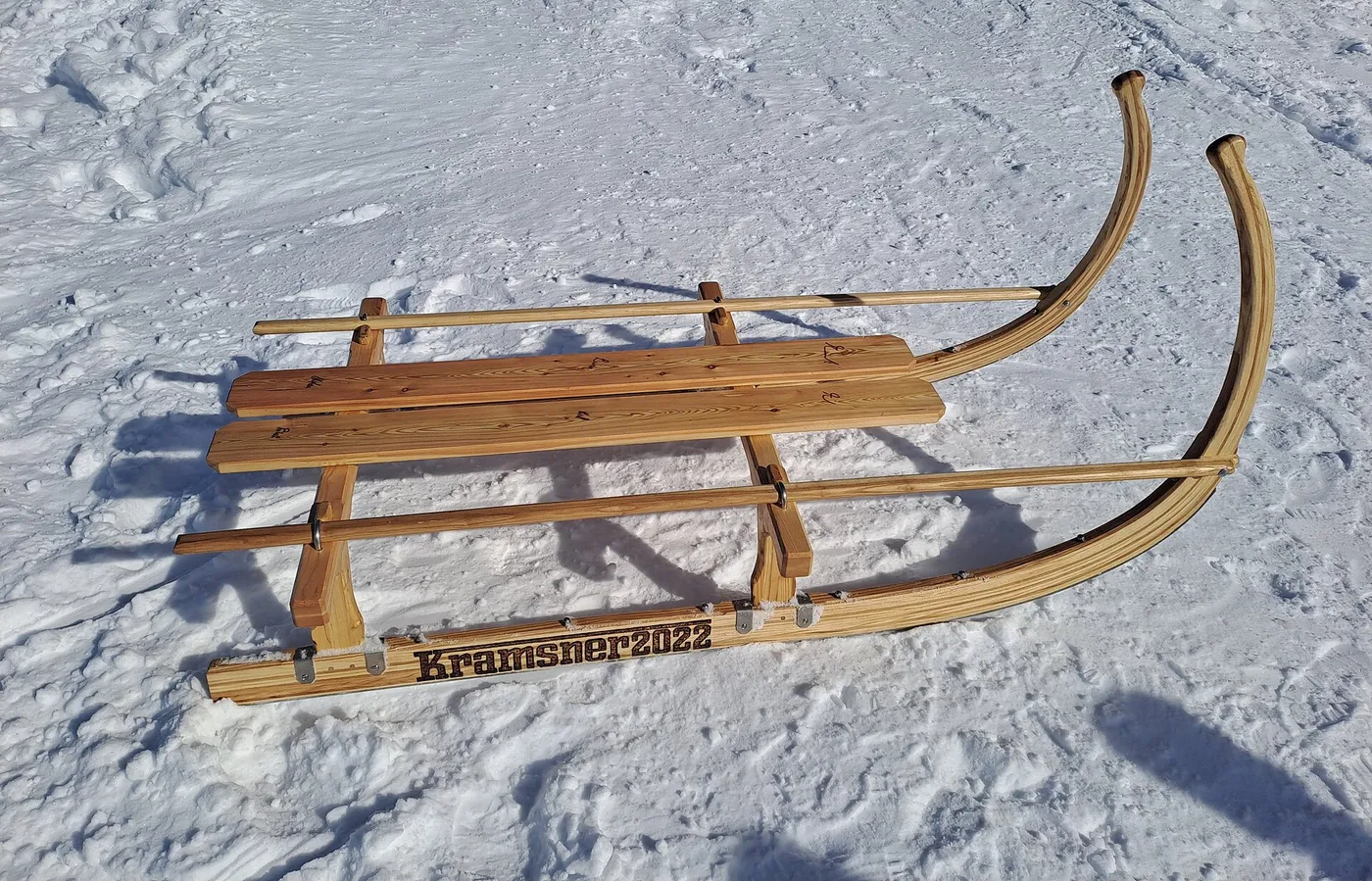
The Alpine ancestor of every racing sled is the farm sled. Mountain families used a Hornschlitten, a sturdy wooden sled with two upturned “horns” at the front, to bring hay and firewood down from high meadows in winter. It carried loads down. Sometimes it carried people down too, and people go faster than hay.
The word came later. Luge is a dialect word from Savoy and French-speaking Switzerland for a small coasting sled. It reaches back through medieval Latin to a root that probably also gave English “sled” and “slide”. English speakers first wrote it down in 1905. German speakers still call the sport Rodeln, and for its first forty years the sport’s governing bodies had German names. “Luge” only became official in 1957, when the founders needed something French for the international federation.
So the sled is ancient. The sport is Victorian. And the people who invented it were, almost to a man and woman, English tourists with time on their hands.
Chapter 2: The English Take Over the Streets

A hotelier’s bet
In 1864 a hotel keeper in St. Moritz called Johannes Badrutt made a wager with four English summer guests.
Winter in the Engadin, he told them, was so sunny that you could sit outside in your shirtsleeves. Come back in December. If you are not convinced, you stay for free.
They came. They stayed until Easter, reportedly sunburnt. Alpine winter tourism had begun, and with it the problem of what to do with wealthy, bored, energetic people in a snowbound village for four months.
The answer they found was the delivery boys’ sleds. Local grocers used small sleds to move goods around the village. English guests borrowed them and raced down the streets of St. Moritz, colliding, according to one dry account, with pedestrians.
Davos, and a poet with a stopwatch
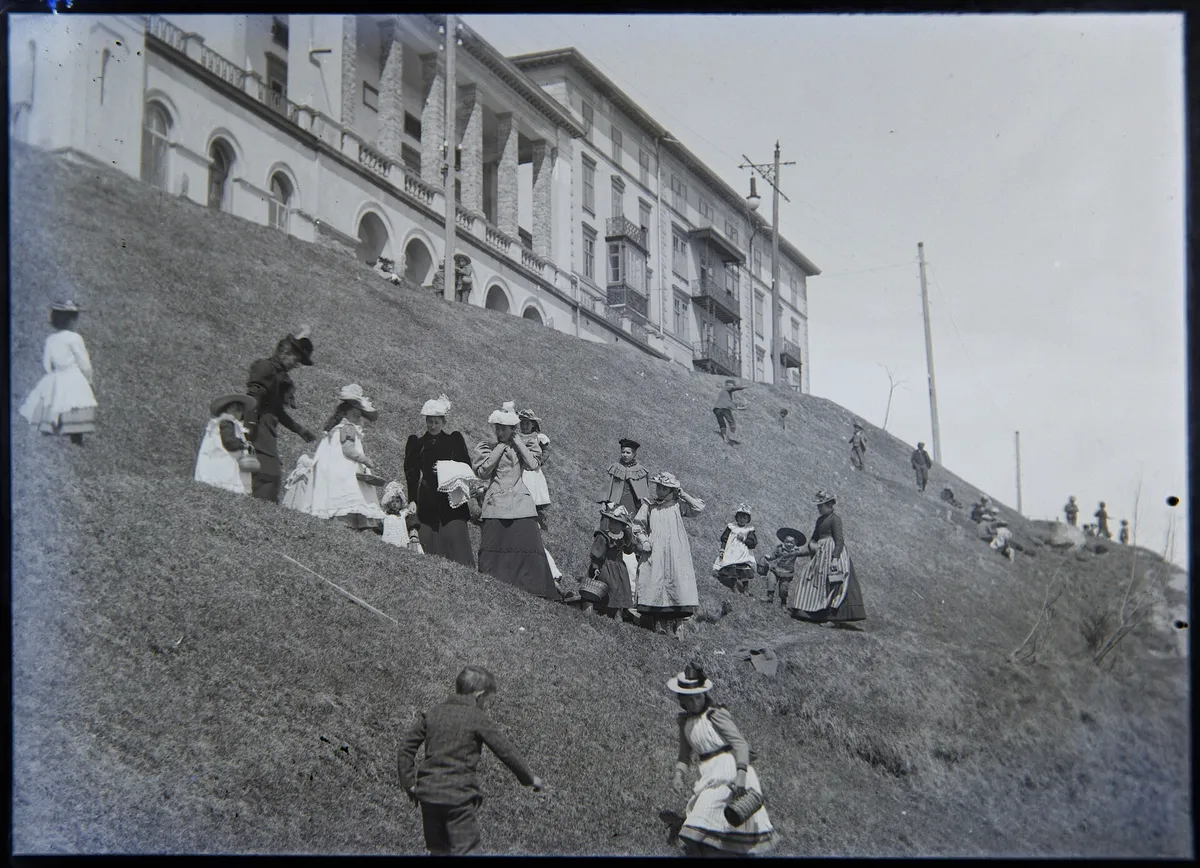
Sixty kilometres away, Davos had discovered its own winter visitors in 1865. Many of them were ill. Davos’s dry, cold air was prescribed for tuberculosis, and the town filled with patients who were told to rest, take the air, and not exert themselves.
Naturally they took up sledding.
At first they simply launched themselves off the slopes above the Kurhaus straight onto the main promenade. In December 1879 the town built a dedicated run with separate up and down lanes, mostly to protect everyone else. In January 1882 there was a local race. In February 1883 a Davos Toboggan Club was formed.
Its president was John Addington Symonds, an English writer and historian of the Italian Renaissance, who had settled in Davos in 1877 because he was dying of tuberculosis. He was also, it turned out, the man who would referee the first international race in the history of sliding sports.
12 February 1883
The race ran along the main post road from Davos-Wolfgang down to Klosters, roughly four kilometres. Twenty-one riders started, twelve Swiss and nine foreigners from about half a dozen countries.
Two men crossed the line in exactly nine minutes and fifteen seconds and shared the win.
One was George Robertson, an Australian. The federation’s histories call him a student. He was in fact George Pringle Robertson, a forty-year-old former cricketer who had come to Davos as an invalid.
The other was Peter Minsch, the postman from Klosters. He knew the road. He drove it for a living.
Symonds judged. A Mrs Elizabeth MacMorland handed out the prizes. The race was repeated every year afterwards as the Symonds Shield, and the sled they rode, an ash-wood Norwegian design refined by local carpenters, took the town’s name. You can still buy a “Davoser” sled today. The word DAVOS is burned into the middle slat.
Rivalry, and a fork in the road
St. Moritz did not like being second. In the winter of 1884-85 Johannes Badrutt’s son Caspar and the Kulm Hotel’s grandly named Outdoor Amusement Committee built their own run, explicitly to compete with the Davos race. It ran from St. Moritz down toward the village of Cresta, so they called it the Cresta Run.
On 16 February 1885 they invited Davos to the first Grand National. Davos won anyway. The celebrations in the Kulm’s bar were said to eclipse anything ever seen in Davos, which suggests the losers were not too upset.
Then, in 1887, a rider named Cornish did something odd. He went down the Cresta head first, on his stomach. He finished fourteenth. Within three years everyone at St. Moritz rode that way. In Davos the following winter an American, L. P. Child, won the Symonds Shield the same way.
This was the moment the sliding sports split. Head first, on your stomach, became skeleton. Feet first, on your back, became luge. The two have been quietly arguing about which one is sensible ever since.
A forty-year-old invalid cricketer and the village postman crossed the line in the same second, and a sport was born on a public road.
Chapter 3: Getting Organised
For thirty years luge stayed a resort pastime with a few local clubs. Then, in 1913, delegates from Austria, Germany and Switzerland met in Dresden and founded an international sled sport federation. The following winter it staged the first European Championships at Reichenberg, now Liberec in the Czech Republic, on an artificial track in the Jeschken mountains. Rudolf Kauschka won the men’s singles. Erwin Posselt and Karl Löbelt won the doubles. Women raced too, but only as a regional championship.
Then the First World War stopped everything. The federation was re-founded in Dresden in 1927 and, in 1935, folded into the bobsleigh federation as its “luge section”. Bobsleigh had been Olympic since 1924. Luge had not, and would spend the next three decades as the junior partner.
The man who changed that was a schoolteacher.
Bert Isatitsch was born in 1911 in Fürstenfeld, Austria, and taught children with special needs in the small Styrian town of Rottenmann. From 1948 he chaired the bobsleigh federation’s luge section. In 1954 the International Olympic Committee, meeting in Athens, agreed that artificial-track luge would replace skeleton on the Olympic programme from 1964.
Oslo, 1955: the man with the barge pole
The first World Championships were held on 5 and 6 February 1955 on the Korketrekkeren, “the Corkscrew”, a natural ice run above Oslo. They were supposed to be just another European Championships. The Norwegian federation asked for an upgrade to mark its sixtieth birthday and got it. Around eighty sliders from eight nations raced in front of thirty thousand spectators and Crown Prince Olav.
The men’s winner was a Norwegian, Anton Salvesen. He steered his metal sled the Scandinavian way, with a wooden pole four or five metres long trailing behind him like a rudder. On Oslo’s wide, flat curves it was an advantage. Nobody has ridden like that at a world championship since. Salvesen retired on the spot to become a shipbroker in New York and did not reappear in the sport until 1979, when he was invited to Königssee to hand out medals. His gold is still the only World Championship medal Norway has ever won in luge.
Karla Kienzl of Austria won the women’s race. Two more Austrians, Hans Krausner and Josef Thaler, won the doubles. Behind them, in second place, came a brother and sister, Josef and Maria Isser. Seventy years later theirs is still the only mixed-sex doubles medal at a major championship.
There were no trophies. Decades later, when Thaler was offered a choice between a plot of building land and a cup as an honorary gift, he chose the cup. “Because we didn’t receive one in Oslo.”
Davos again, 1957
On 25 January 1957, in the town where it had all started, delegates from thirteen nations founded the Fédération Internationale de Luge de Course. Bert Isatitsch was elected its first president. He held the job for thirty-seven years, until his death in 1994. The IOC recognised the new federation the same year, and luge had seven winters to get ready for the Olympics.
Chapter 4: Innsbruck, 1964
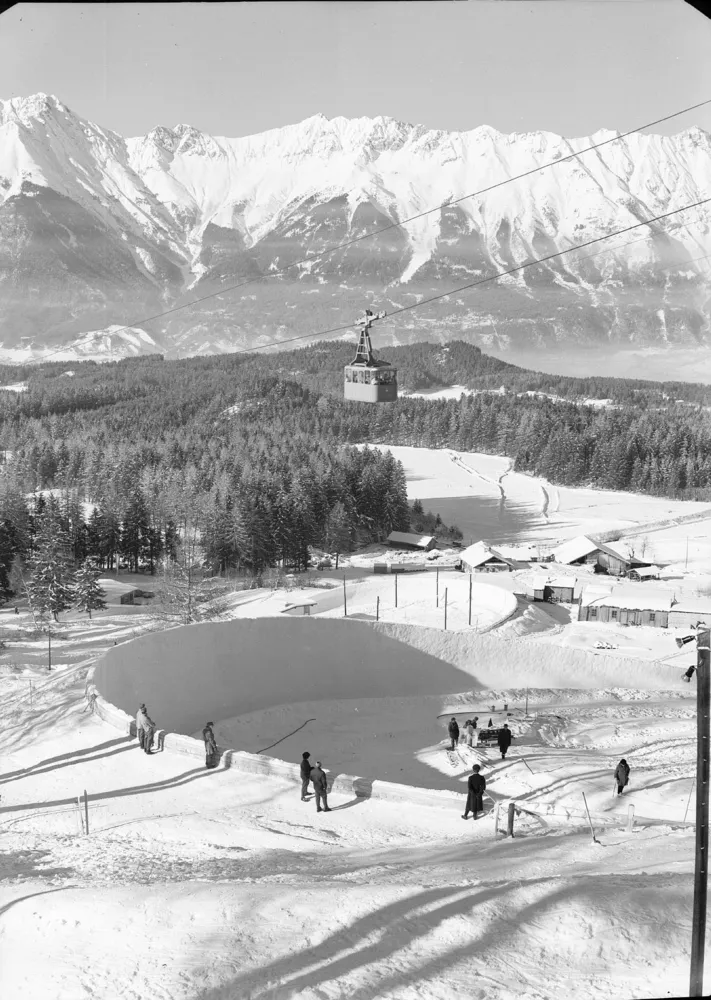

Luge nearly made its Olympic debut in 1960 at Squaw Valley in California. The organisers simply did not build a track. So the debut waited for Innsbruck, and the concrete chute at Igls, iced by the winter weather.
Two weeks before the opening ceremony, on 21 January 1964, a British slider crashed in training. Kazimierz Kay-Skrzypecki was Polish-born, an architect trained in Lwów who had served as an engineer officer with the Polish Air Force in Britain, and he was fifty-eight. He had come to the sport late. He died the next day during emergency surgery. Three days later an Australian skier, Ross Milne, died in a training crash of his own. The Games went ahead.
It is easy to skate past this. The first Olympic luge event in history was preceded by the first Olympic luge death, and the sport’s reputation as “too dangerous” was set on day one.
The racing itself was a German affair, in a peculiar way. In 1964 East and West Germany still competed together as a United Team. The men’s podium was entirely German: Thomas Köhler and Klaus Bonsack from the East, Hans Plenk from the West. Ortrun Enderlein of East Germany won the women’s race. An Austrian pair, Josef Feistmantl and Manfred Stengl, won the doubles. Germany, in its combined form, took five of the nine medals.
From 1968 the two Germanies raced separately. That made things much worse for everyone else, and much more interesting.
Chapter 5: Hot Steel and Cold Clocks
Grenoble, 1968
The women’s race at the 1968 Games was held at Villard-de-Lans, near Grenoble. After three of the four runs, three East German women held three of the top four places. Ortrun Enderlein, the defending champion, was leading. Anna-Maria Müller was second. Angela Knösel was fourth.
Then a Polish official named Lucjan Świderski, the federation’s technical supervisor, tested their runners and found them warm.
A warm steel runner melts a slightly thicker film of water under it and glides faster. It is the oldest trick in sledding. All three were disqualified. The fourth run was cancelled for bad weather, and Italy’s Erika Lechner, who had been third, was declared Olympic champion.
What followed was a small Cold War. The West German press said the East had cheated. East German officials said the West German federation had set them up. The three women swore a notarised oath of innocence. Müller came back and won gold in 1972, which suggests she did not need warm runners. In 2006, Stasi files surfaced that claimed Świderski had been bribed by West Germany and Austria. Nobody has ever proved who cheated whom.
Three women swore a notarised oath of innocence. Thirty-eight years later the Stasi files told a different story.
The rule that came out of it is still in force. Before every run, each slider’s steels are measured against a “control steel” kept in the shade at the start. If yours are more than five degrees warmer, you are out.
Sapporo, 1972
Four years later the sport had a different kind of problem.
In the doubles at Sapporo, Italy’s Paul Hildgartner and Walter Plaikner and East Germany’s Horst Hörnlein and Reinhard Bredow recorded exactly the same time. One minute, twenty-eight point three five seconds. The clocks read to hundredths, and to the hundredth they were level. Two gold medals were awarded. It remains the only tie in Olympic luge.
The sport bought better clocks.
Two sleds, one time, two gold medals. The sport bought better clocks. From then on luge was timed to the thousandth of a second, which is why, twenty-six years later, one woman could beat another by two of them.
Hildgartner, a South Tyrolean, went on to win singles silver at Lake Placid in 1980 and singles gold at Sarajevo in 1984. He was the first slider to win Olympic titles in both doubles and singles, and the first of a long line of great Italian lugers from the German-speaking mountains around Bolzano.
Chapter 6: The Concrete Revolution
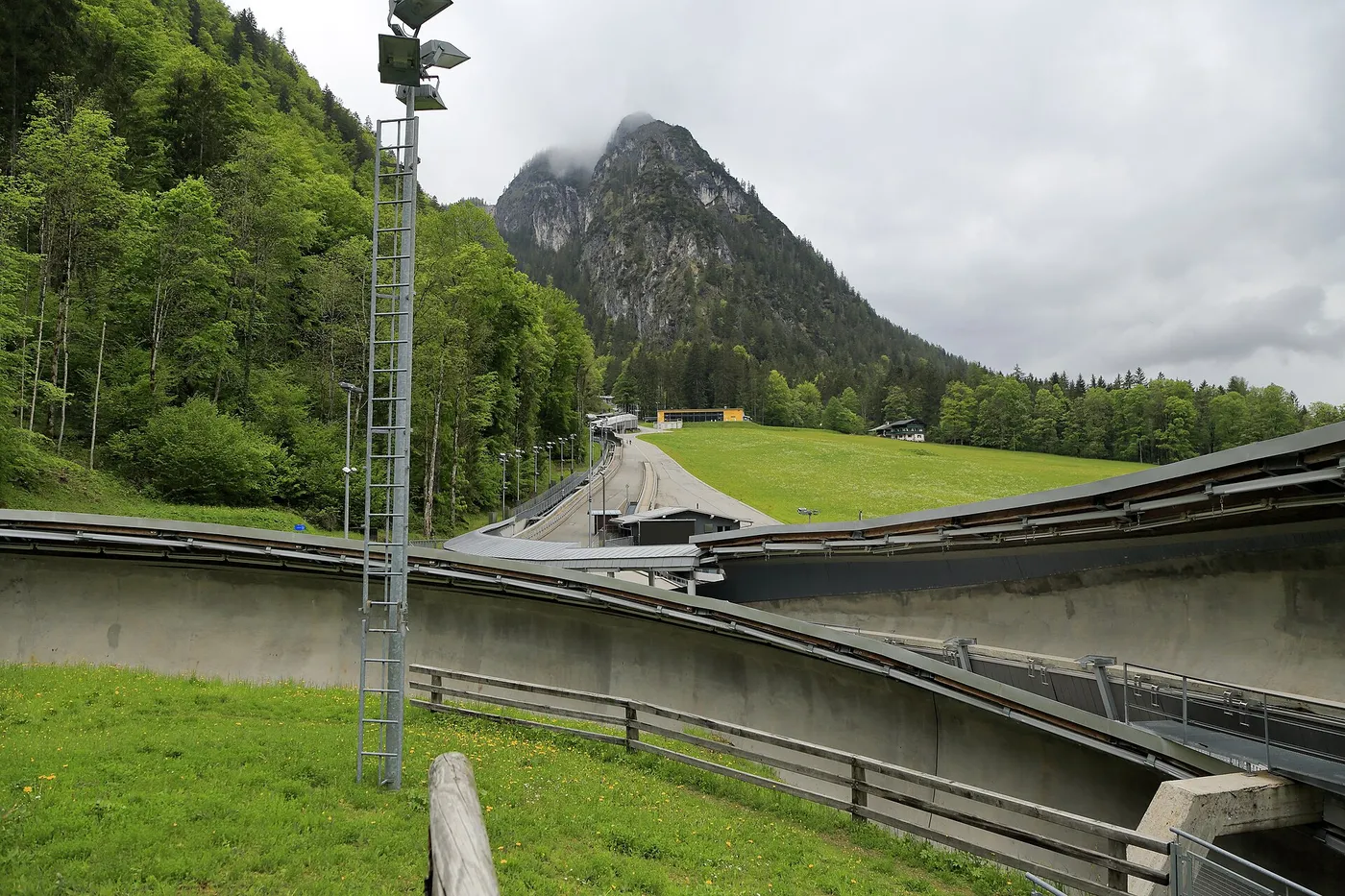

For its first eighty years, luge was raced on natural ice: snow packed onto roads and gullies, banked by hand, sprayed with water, at the mercy of the weather. The 1964 Olympic chute at Igls was concrete but had no refrigeration.
That ended in 1968 beside a lake in Bavaria.
Königssee, near Berchtesgaden, built the world’s first permanently refrigerated luge track. Pipes of ammonia ran under the concrete and kept the ice hard whatever the sky was doing. The 1969 World Championships were the first held on artificial ice, and luge became a sport you could schedule.
Three years later, in East Germany, an engineer named Udo Gurgel designed the track at Oberhof. It was the first track calculated entirely by computer, curve by curve. Gurgel then spent the next forty years quietly drawing most of the sport’s important tracks on both sides of the Iron Curtain: Altenberg, Sigulda, Calgary, Lillehammer, Nagano, Park City, Cesana, Whistler and Sochi. If you have ever watched an Olympic luge race, you have probably watched it on a Gurgel track.
Innsbruck knocked down its 1964 chutes and built, for the 1976 Games, the first refrigerated track shared by bobsleigh, luge and skeleton. That combined design is the template every track has followed since.
Altenberg, in the Erz Mountains where sled racing had been recorded in the 1550s, was built from 1983 as an East German state secret and opened in 1986. Sliders still call it the hardest track in the world.
The tracks the Games left behind
Olympic tracks have a way of outliving their usefulness.
Sarajevo’s track on Mount Trebević hosted fifty thousand spectators in 1984. Eight years later it was a Bosnian Serb artillery position in the siege of the city. It is pocked with bullet holes and covered in graffiti, and locals now mountain-bike down it.
Calgary’s track, where Cool Runnings was filmed, closed in 2019 for want of eight million Canadian dollars in refrigeration repairs. Nagano’s closed in 2018. Cesana, built for Turin 2006 at a cost of a hundred and ten million euros with eighty-seven kilometres of ammonia pipe under the hillside, was used for five seasons, abandoned in 2011, and is scheduled for demolition in the summer of 2026, the same year Italy hosts the Games again a few hundred kilometres away.
There are about sixteen tracks in the world in international use today. All are refrigerated concrete except one: St. Moritz, opened in 1903, is still carved by hand out of snow every winter.
Olympic tracks at a glance
| Games | Track | Notes |
|---|---|---|
| 1964 | Igls, Innsbruck | Natural ice on concrete. Training death of Kay-Skrzypecki. |
| 1968 | Villard-de-Lans, Grenoble | The heated-runners disqualifications. |
| 1972 | Mount Teine, Sapporo | The only tie in Olympic luge. |
| 1976 | Igls, Innsbruck | First refrigerated combined track. |
| 1980 | Lake Placid | First luge track in North America. |
| 1984 | Trebević, Sarajevo | Later an artillery position in the siege. |
| 1988 | Calgary | Closed 2019. |
| 1992 | La Plagne | Will host again in 2030. |
| 1994 | Lillehammer | Prock loses to Hackl by 0.013 s. |
| 1998 | Nagano | First track in Asia. Closed 2018. |
| 2002 | Park City | Fastest track in the world until Whistler. Hosts 2034. |
| 2006 | Cesana | Abandoned 2011. Demolition 2026. |
| 2010 | Whistler | Speed record of 154 km/h. Death of Kumaritashvili. |
| 2014 | Sochi | Three uphill sections built in to cap speed. |
| 2018 | PyeongChang | Loch’s mistake in curve 9. |
| 2022 | Yanqing | First track with a 360-degree curve. |
| 2026 | Cortina d’Ampezzo | Rebuilt on the site of the 1923 track. |
Chapter 7: The East German Machine
From 1972 to 1988, East Germany did not so much compete in luge as own it.
At Sapporo in 1972 the GDR won eight of the nine medals available. At Calgary in 1988, its last Games before the Wall came down, it won eight of nine again. In between it collected most of the golds at Innsbruck and Lake Placid. By the end it had twenty-nine Olympic medals, thirteen of them gold, from a country of sixteen million people.
The explanation was not luck. In 1963 the GDR founded an institute in Berlin with the unlovely name of the Institute for Research and Development of Sports Equipment, known as FES. It applied engineering to sleds the way the West applied it to cars: aerodynamics, materials, video analysis, wind tunnels. The Oberhof track gave the team a home. The state gave it money.
FES survived reunification. It still employs about eighty people, still has a wind tunnel, and still builds the sleds for the united German team with materials its director compares to Formula One. Its stated mission is to shave two tenths of a second off every run in each four-year Olympic cycle. Germany’s dominance since 1990 rests on that building as much as on any athlete.
Chapter 8: The Speeding Weisswurst
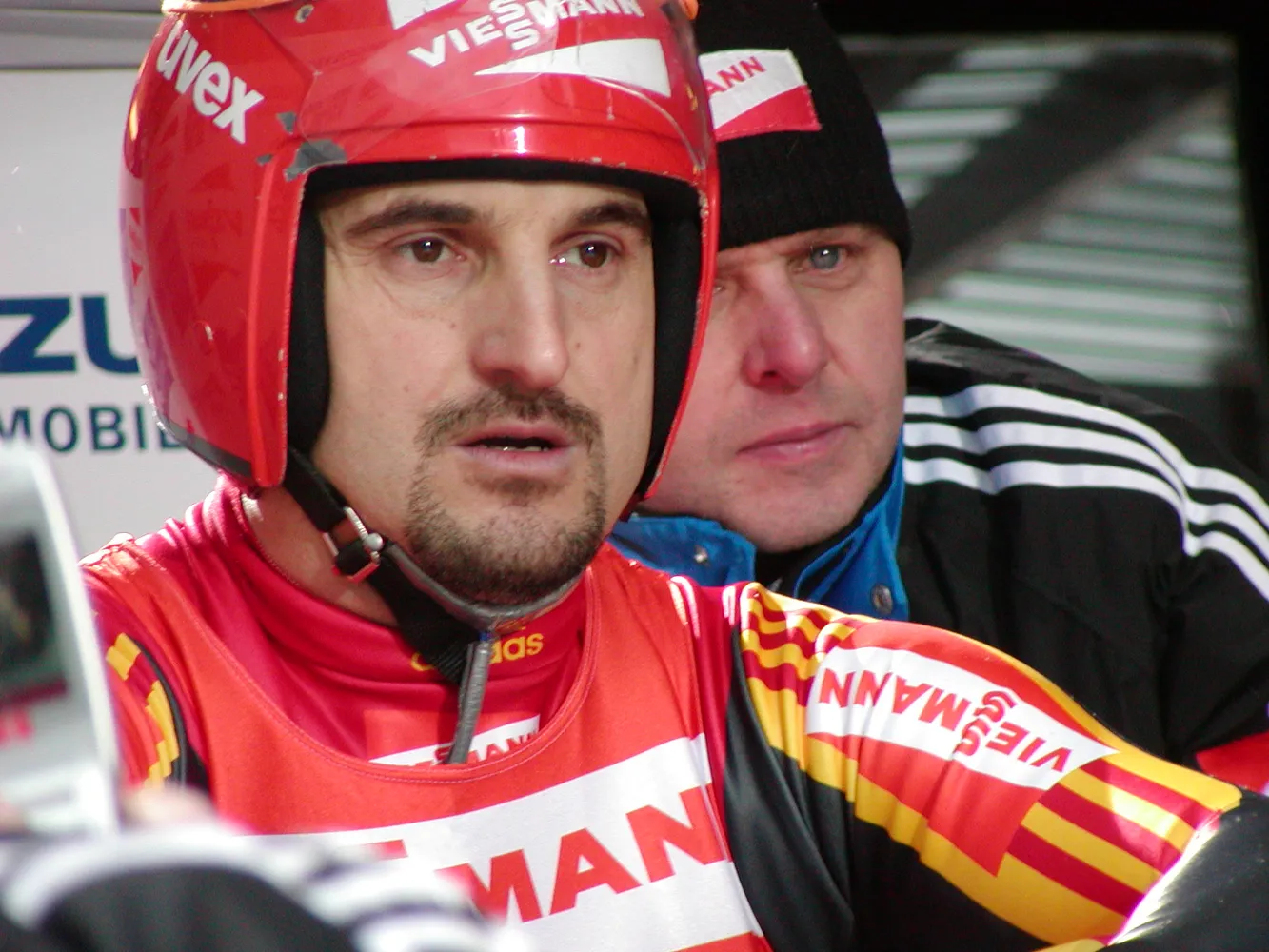

Georg Hackl was born in 1966 in Berchtesgaden, a few kilometres from the Königssee track. At sixteen he apprenticed as a metalworker specifically so that he could build his own sleds. Everyone in Bavaria calls him Schorsch. Everyone else calls him the Speeding Weisswurst, because in his white one-piece racing suit he looked like a Bavarian veal sausage travelling at a hundred and forty kilometres an hour.
He won silver at Calgary in 1988 for West Germany. Then, for reunified Germany, he won gold at Albertville in 1992, Lillehammer in 1994 and Nagano in 1998, and silver again at Salt Lake City in 2002. Five medals in the same individual event at five consecutive Games. No athlete in any sport, summer or winter, had done that before. He raced a sixth Games in 2006 at the age of thirty-nine and finished seventh.
The other man
For most of that time his shadow was an Austrian called Markus Prock.
Prock won the overall World Cup ten times. He was, over a full season, the best luger in the world for a decade. But at the Olympics he kept meeting Hackl. Silver in 1992. Silver in 1994, when he lost by thirteen thousandths of a second over four runs. Bronze in 2002.
Prock owned the winters. Hackl owned the fortnight that mattered.
Prock owned the winters. Hackl owned the fortnight that mattered. Prock later ran the Austrian federation, so he got a kind of revenge: his sliders beat Germany in the 2026 relay for silver.
Yellow booties
At Nagano in 1998 Hackl turned up in a new pair of yellow aerodynamic overboots that pointed his toes and, by the estimates of the time, saved two or three hundredths of a second per run. The American and Canadian teams protested, complaining that when they had asked the manufacturer for the same boots they had been told there was a shortage of materials. The protest failed. Hackl set the fastest time in all four runs, the first time that had ever been done, and won his third gold. “They’re a very aerodynamic shape,” he said. “That’s the advantage.”
Three years later he broke the track record at Calgary and immediately stuffed his sled into a bag so nobody could photograph it. After he retired he ran a sled preparation group for the German team. Its sliders won all four golds at Sochi.
Two thousandths
Nagano gave the sport its closest finish. In the women’s singles, Germany’s Silke Kraushaar beat her teammate Barbara Niedernhuber by two thousandths of a second. Over four runs and nearly five kilometres of ice, the difference was about the length of a matchbox.
Chapter 9: The Cannibal and the Brothers
Armin Zöggeler
If Hackl set the record for consistency, Armin Zöggeler broke it.
Zöggeler is from Merano in South Tyrol, the same German-speaking corner of Italy that produced Hildgartner. He is a Carabiniere by profession, and he was nicknamed Il Cannibale for what he did to fields. He won bronze at Lillehammer in 1994, silver behind Hackl at Nagano, gold at Salt Lake City in 2002 and Turin in 2006, then bronze at Vancouver in 2010 and, at the age of forty, bronze again at Sochi in 2014.
Six medals in the same individual event at six consecutive Games. Nobody in any sport had done it. He added six world titles and ten World Cup crowns. In 2010 he declined the honour of carrying Italy’s flag at the opening ceremony because he was racing the next night. Today he runs the Italian federation’s sled development, with input from Ferrari.
Brothers
Luge doubles is the only Olympic event in which two people lie on top of each other on purpose, and it has been a family business.
Andreas and Wolfgang Linger, from Hall in Tirol, won doubles gold in 2006 and 2010 and silver in 2014. Wolfgang broke an ankle and a fibula in a crash a year before their first title. Andris and Juris Šics, from the Latvian track town of Sigulda, took silver in 2010 and two bronzes in 2014. Those three medals are more than any other Latvian Olympian has ever won.
And there are the two Tobiases. Tobias Wendl and Tobias Arlt are not brothers, but they have raced together for Germany since 2008 and by the end of the 2026 Games they held eight Olympic medals between them, seven of them gold. More on them shortly.
Tatjana Hüfner
The women’s field in this era belonged to Tatjana Hüfner, from Neuruppin near Berlin: bronze in 2006, gold in 2010, silver in 2014 and five world titles. Her successor was already waiting on the same podium.
Chapter 10: Whistler, 12 February 2010
The Whistler Sliding Centre, built for the Vancouver Games, was the fastest track ever made. In a World Cup there in February 2009, Germany’s Felix Loch was clocked at 153.98 kilometres an hour, still the recognised record. A year later, in training, Austria’s Manuel Pfister nudged 154. The federation had asked for changes to six curves in the spring of 2009. Organisers’ internal emails discussed the possibility of an athlete being, in their words, badly injured or worse.
Nodar Kumaritashvili was twenty-one and came from Bakuriani, a ski town in Georgia. His father had been a luger too. On the phone from Canada, his father told him to brake, not to take risks. Nodar said no, he would risk it, what would be would be.
On the morning of the opening ceremony he lost control coming out of the fifteenth curve, was thrown from his sled in the sixteenth, cleared the wall and struck an unpadded steel post. He was travelling at about 143 kilometres an hour. He died at the scene. The IOC president, Jacques Rogge, told a press conference he had no words.
The official investigation found no fault with the track and blamed driving errors. The same night, the men’s start was moved down to the women’s start, the women’s and doubles start was moved down to the junior start, the wall at curve sixteen was raised, and the posts were padded. The British Columbia coroner ruled the death an accident, noting that the athlete had been sliding faster than at any time in his life.
Loch won the men’s gold two days later, at twenty the youngest champion in the event’s history. He later had the medal cut in two and gave one half, engraved with Nodar’s face and dates, to the Kumaritashvili family.
The gold medal was cut in two. One half went home to Bakuriani.
Since then the federation has capped the design speeds of new tracks. Sochi’s track, built for 2014, has three uphill sections whose only purpose is to slow sleds down. Whistler itself was re-profiled. The sport’s own studies show luge to be among the lowest-injury sports at a Winter Games. The two deaths in its Olympic history bracket it all the same: one before the first race, one before the opening ceremony of the fastest track ever built.
Chapter 11: The German Decade
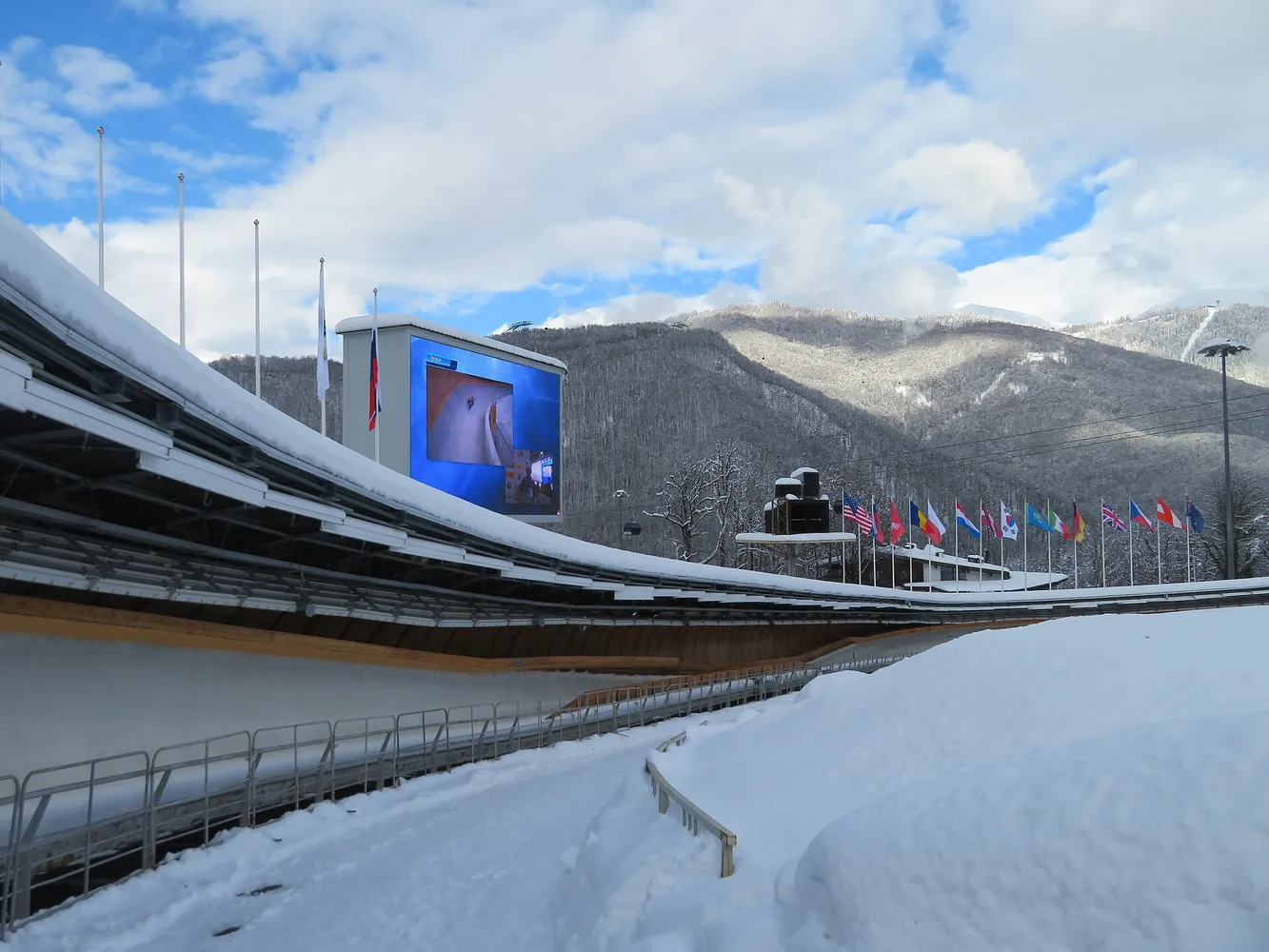

Sochi, 2014
The 2014 Games added a fourth luge event, the team relay: a woman, a man and a doubles pair sliding one after another, each hitting a touch pad at the finish to open the start gate for the next.
Germany won it. Germany also won the men’s singles with Felix Loch, the women’s singles with Natalie Geisenberger, and the doubles with Wendl and Arlt. Four events, four golds.
The rest of the field had its own stories. Erin Hamlin of the United States won bronze in the women’s singles, the first medal any American had won in fifty years of Olympic singles luge. Tucker West, eighteen, became the youngest American man ever to slide at the Games. His father had built him a 485-foot luge track in the back garden in Connecticut after Tucker watched the 2002 Olympics on television, and he was hitting sixty kilometres an hour among the trees before he was ten. The Šics brothers took two bronzes for Latvia. Zöggeler took his sixth medal.
PyeongChang, 2018
Loch led the men’s singles going into the final run. He came out of curve nine wide, skidded, and dropped to fifth, thirty-five thousandths from a medal. “That is one part of the track you are not allowed to make a mistake,” he said afterwards. “But it’s only sport.”
David Gleirscher of Austria, who had never won a World Cup race, won Olympic gold. “In the first moment I thought Felix is going to be Olympic champion,” he said, “and then he made a mistake. It’s just magic.”
Second was Chris Mazdzer from Saranac Lake, New York, the first American man ever to medal in singles. He had spent the season in a slump so deep that, before the Games, an unnamed Russian rival had offered him his own sled to try. Mazdzer was too big for it and crashed. But the gesture, he said, shook something loose. He said afterwards that he knew he was out of control and had pushed the limits on all four runs. Germany won the other three events.
Beijing, 2022
Germany swept all four golds again. Johannes Ludwig became the oldest men’s champion. Wendl and Arlt won a third straight doubles title. Natalie Geisenberger won her third straight women’s singles and her third straight relay: the first luger to win two golds at three consecutive Games. She had come back from having a baby to win the World Cup nine months later. She retired in September 2023 with seven Olympic medals, six of them gold, the most successful German Winter Olympian ever.
Chapter 12: Cortina, 2026
The argument about a track
Cortina d’Ampezzo’s sliding track dated from 1923 and had hosted the 1956 Games. It closed in 2008 and rotted. When Italy won the right to host the 2026 Games, the IOC asked it, then begged it, to use an existing track abroad rather than build a new one. Cesana, the abandoned 2006 track, was rejected as too far gone. Italy insisted on rebuilding Cortina.
Ground was broken in February 2024 with two years to go. Lake Placid, in New York State, was named the official backup at no cost. In March 2025 sixty athletes slid the new track for the first time and passed it. It was finished in November, three months before the Games. It cost roughly a hundred and twenty million euros.
New events
Since 1994 the doubles had officially been an “open” event that women were free to enter. None ever had. In June 2022 the IOC approved a separate women’s doubles for 2026, and the team relay grew to four legs: women’s singles, men’s doubles, men’s singles, women’s doubles.
What happened
Germany’s Max Langenhan won the men’s singles with four track records. Julia Taubitz won the women’s for Germany, with Ashley Farquharson taking bronze for the United States. Italy’s Emanuel Rieder and Simon Kainzwaldner won the men’s doubles at home, ending a German streak that went back to 2014. Wendl and Arlt, in third, still added an eighth Olympic medal to their collection.
On 11 February 2026, Andrea Vötter and Marion Oberhofer of Italy became the first Olympic champions in women’s doubles.
And Germany won the relay for the fourth time in four editions. It has never lost one. Felix Loch, thirty-six, finished sixth in the singles and said he would carry on to 2030.
Chapter 13: How It Actually Works

The sled
A racing luge has four parts and no moving ones.
Two kufens, the curved runners, from the German word for runner. Two steels, the thin polished blades bolted under the kufens, the only part of the sled that touches ice. Two bridges, the crossbars that join the kufens. And the pod, the fibreglass shell the athlete lies on. A singles sled weighs between twenty-one and twenty-five kilograms. A doubles sled, up to thirty.
Heavier sliders go faster, because they carry more momentum against air resistance. So lighter athletes are allowed to wear a weighted vest, up to a limit set by formula. The weight goes on the body, never on the sled.
Before every run the steels are measured for width, edge radius and, thanks to Grenoble 1968, temperature.
The start
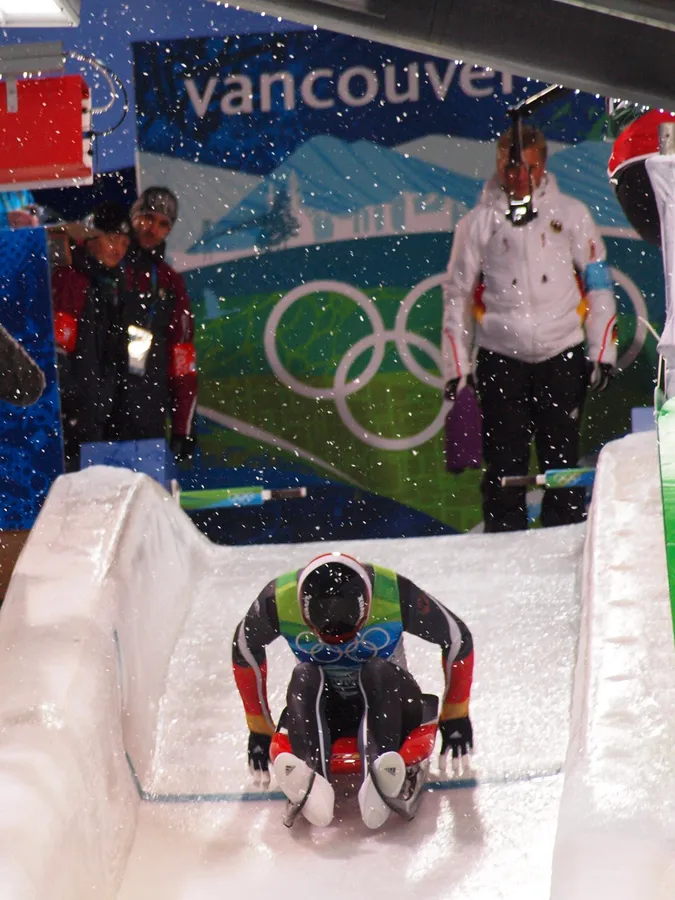
The slider sits on the sled, grips two fixed handles, rocks back and forth, and pulls. Then, still sitting, they paddle the ice with gloved hands for a few strokes. The gloves have five-millimetre steel spikes on the fingertips. Then they lie back. A good Olympic start takes about two and a half seconds and is timed separately, because it is the only part of the run where the athlete adds energy. Everything after that is gravity.
Steering
There is no steering mechanism. To turn left, the slider presses the right calf against the front of the right kufen, which flexes the runner and makes the steel bite. To turn right, the left calf. The shoulders press into the pod for finer adjustments. A small movement of the head changes the aerodynamics. The slider is looking at the sky and, past their own feet, a sliver of track.
The best sliders describe a run not as a series of steering inputs but as a series of small permissions: letting the sled do what it wants, and touching it only when it is about to do something else.
A run is a series of small permissions: letting the sled do what it wants, and touching it only when it is about to do something else.
Speed and force
A modern track drops between a hundred and twenty and a hundred and fifty metres over a kilometre and a half. Sleds reach 130 to 145 kilometres an hour in a race, and in the banked curves the slider is pressed into the pod with about five times their body weight. The 154 kilometres an hour at Whistler is the ceiling, and since 2010 tracks are designed not to reach it.
The joke
Every comedian who has ever looked at luge has made the same joke, and Jerry Seinfeld made it best. It is the only Olympic event, he said, where you could have people competing against their will and it would look exactly the same. In January 2026 Saturday Night Live revived it with a sketch about a terrified luger who thought a corpse of her own shape could win. The American Olympian the sketch was modelled on, Summer Britcher, replied that she was flattered to have a body that was the perfect shape.
Sliders find the joke funny for about one season. Then they point out that the difference between gold and fifth place at the 2018 Games was less than the time it takes to blink.
Chapter 14: The Other Luge
Everything in this book so far happens on refrigerated concrete. There is another luge, older and slower, that never made it to the Olympics.
Natural track luge, Naturbahnrodeln, is raced on iced mountain roads and paths with no banking and no refrigeration. The sled has a rein. The slider sits up more, steers hard with legs and body, and brakes with spiked shoes. It is more physical, more technical and, most seasons, more fun to watch.
European championships have been held since 1970 and world championships since 1979, mostly in Austria and the Italian South Tyrol, which between them supply nearly all the champions. Italy’s Patrick Pigneter and Evelin Lanthaler each hold five world singles titles. The federation has bid for Olympic inclusion more than once and been turned down every time.
There is a nice circularity coming. For the 2027 World Championships, Innsbruck is reviving the abandoned 1964 Olympic luge chute at Igls, the one Kay-Skrzypecki died on, for a natural-track event. The sport will go back to where its Olympic story started, on the ice it started with.
A Timeline
| Year | What happened |
|---|---|
| c. 800 | Oldest surviving sleds, Oslofjord region. |
| 1480s | First written records of sled racing, Norway. |
| 1550s | Sled races recorded in the Erz Mountains. |
| 1560s | Archduke Ferdinand II stages sled races in Innsbruck. |
| 1864 | Johannes Badrutt’s winter bet with four English guests, St. Moritz. |
| 1879 | Davos builds the first dedicated toboggan run. |
| 1883 | 12 February: first international race, Davos to Klosters. Robertson and Minsch tie. |
| 1885 | First Grand National on the new Cresta Run. Davos wins. |
| 1887 | Cornish rides the Cresta head first. Skeleton and luge diverge. |
| 1913 | International sled sport federation founded in Dresden. |
| 1914 | First European Championships, Reichenberg. |
| 1935 | Luge becomes a section of the bobsleigh federation. |
| 1954 | IOC decides luge will replace skeleton on the Olympic programme. |
| 1955 | First World Championships, Oslo. Salvesen wins with a barge pole. |
| 1957 | 25 January: FIL founded in Davos. Isatitsch president. |
| 1964 | Olympic debut, Innsbruck. Death of Kay-Skrzypecki in training. |
| 1968 | Grenoble: three East German women disqualified for heated runners. Königssee opens the first refrigerated track. |
| 1971 | Oberhof: first computer-designed track. |
| 1972 | Sapporo: doubles tie. Timing goes to thousandths. |
| 1976 | Igls: first refrigerated combined track. |
| 1979 | First natural-track World Championships, Inzing. |
| 1984 | Hildgartner wins singles gold in Sarajevo. |
| 1988 | GDR wins eight of nine medals at Calgary. Hackl’s first medal. |
| 1992–98 | Hackl wins three consecutive golds. |
| 1994 | Prock loses to Hackl by 0.013 s. |
| 1998 | Kraushaar wins by 0.002 s. The yellow booties. |
| 2002–06 | Zöggeler wins two golds. Lingers win their first. |
| 2009 | Loch clocked at 153.98 km/h at Whistler. |
| 2010 | Death of Nodar Kumaritashvili. Loch youngest champion. |
| 2014 | Team relay added. Germany sweeps four golds. Hamlin’s US bronze. Zöggeler’s sixth medal. |
| 2018 | Loch’s mistake in curve 9. Gleirscher gold. Mazdzer silver. |
| 2022 | Second German sweep. Geisenberger’s sixth gold. |
| 2026 | Cortina. First women’s doubles. Italy wins both doubles at home. Germany’s fourth relay gold. |
| 2027 | Natural-track Worlds return to the 1964 chute at Igls. |
Notes on Sources and Disputed Facts
This book was written from three research fact sheets kept alongside it in the research/ folder. Each claim there carries a source link. The main sources were the International Luge Federation’s own history pages and anniversary articles, Olympics.com, Olympedia, Wikipedia in English and German, the Kulm Hotel and Cresta Run histories, the Davos tourism archive, NBC Olympics, USA Luge, and contemporary reporting from ESPN, CBC, CNN, NPR, the Deseret News and the Irish Times.
Where sources disagree, this book has chosen the plainer or vaguer version. The disagreements worth knowing about:
- The Vikings. No source of any standing says Vikings raced sleds. The claim comes from the age of excavated sleds, nothing more.
- The 1883 race. The number of nations is given as six or seven depending on the source. George Robertson is called an Australian student by the federation and identified as a forty-year-old former cricketer by others. The postman’s name is spelled Minsch and Minch.
- Oslo 1955. The Korketrekkeren’s curve count is given as thirteen by one source and sixteen by another.
- Kay-Skrzypecki. His birth year is given as 1905 and 1910. His surname is spelled two ways.
- Grenoble 1968. Whether the East German women actually heated their runners has never been settled. The Stasi files alleging bribery of the official have not been independently verified.
- Nagano 1998. Some retellings say Austria protested Hackl’s booties. Contemporary reporting says the United States and Canada did.
- Kumaritashvili’s speed. Reported as 143.3 and 143.6 km/h. One day-of report misidentified the curve.
- Medal counts. German totals vary widely because sources choose differently whether to combine the United Team, West Germany, East Germany and reunified Germany. Wendl and Arlt overtook Geisenberger as the most decorated Olympic lugers only in 2026; older articles still name her.
- Track lengths for 1968, 1972 and 1980 are approximate.
Corrections welcome. The fact sheets are the place to record them.